Address
NO.313,Unit3,LaoDong WestRoad,TianNingDistrict,Changzhou,JiangSu,China
Work Hours
Monday to Friday: 9AM - 5PM
Weekend: 10AM - 5PM
Address
NO.313,Unit3,LaoDong WestRoad,TianNingDistrict,Changzhou,JiangSu,China
Work Hours
Monday to Friday: 9AM - 5PM
Weekend: 10AM - 5PM

In the high-stakes world of industrial food safety, predictability is the ultimate benchmark of quality. For decades, the global supply chain relied on fragmented manufacturing processes to produce hygiene wear. However, as North American regulatory audits grow more stringent and labor costs rise, major US safety and food service distributors are shifting their focus.
Today, the future of food safety protection belongs to standardized machine production. Transitioning from traditional manual processes to fully automated, high-precision manufacturing is not just an upgrade in efficiency—it is a critical evolution in eliminating contamination risks at scale.
While handcrafted items have their merit, human intervention inherently introduces variability. In mass-scale food processing plants, a variation of just a few millimeters in a hairnet’s elastic tension or a single loose thread can result in a catastrophic batch contamination incident.
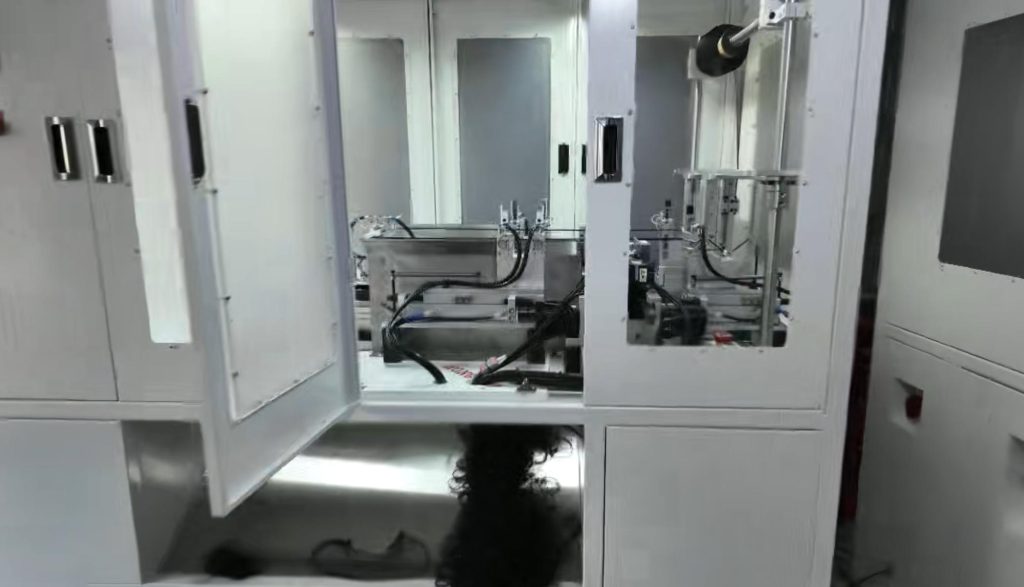
Automated, standardized machine production solves this by enforcing absolute mathematical consistency. Every nylon honeycomb hair net produced on an automated line undergoes precise mechanical tensioning and ultrasonic laser welding. This ensures that every knot, every edge, and every elastic band is structurally identical. By removing human touch from the primary fabrication phase, the risk of pre-delivery contamination or structural deviation drops to near zero.
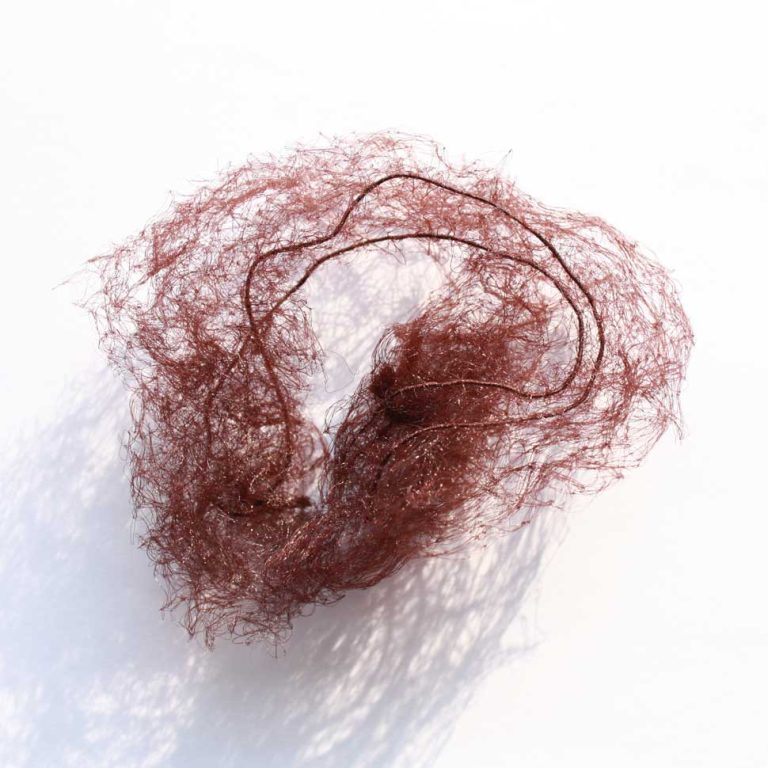
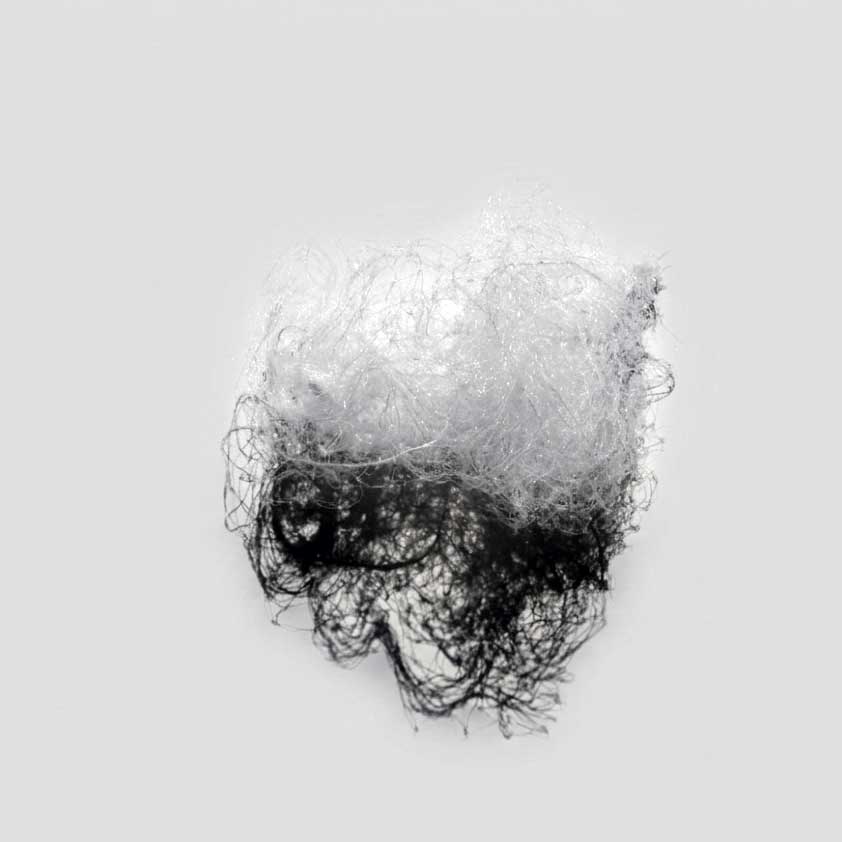
Automated manufacturing lines require the highest grade of raw materials to operate without interruption. Our standardized production utilizes top-tier, break-resistant filaments to output lightweight nylon hairnets (15D) and heavy-duty hairnets (55D) with unyielding uniformity.
Unlike manual weaving, where the pulling force fluctuates based on the worker’s fatigue levels throughout a shift, automated loom systems apply a perfectly consistent tensile force. This results in a more stable grid structure that resists tearing under intense industrial movement, giving US food service workers a dependable barrier that lasts through extended, high-intensity shifts.
For large-scale US industrial distributors, a manufacturer’s capacity is just as critical as product quality. A sudden spike in demand from a major multinational food processing client cannot wait for a manual workshop to slowly ramp up production.
Standardized machine manufacturing provides unmatched scalability. Operating with optimized high-speed output, an automated facility can secure large-scale bulk orders (such as standard 1,000/Case packaging) with drastically shortened lead times. Partnering with an experienced hair nets manufacturer in China that provides automated, customized supply chain solutions means US procurement officers can maintain lean inventory levels, confident that their back orders will always be filled on schedule.
In the competitive B2B landscape, margins matter. Manual labor heavily inflates the unit cost of safety consumables. By standardizing the production line with automated machinery, manufacturing efficiency skyrockets while waste raw material is minimized.
This drastic reduction in overhead allows factory-direct suppliers to offer highly competitive wholesale pricing without compromising on material grade or FDA compliance guidelines. US distributors can pass these savings along to their end-users or absorb higher margins to fuel their own local market growth.
For the modern food safety industry, standardization is the truest form of protection. Machine-made hairnets deliver what manual processes never could: absolute consistency, unyielding structural durability, and rapid, high-volume scalability.
Align your inventory with the future of industrial hygiene. Choose a manufacturing partner equipped with advanced automated production lines to secure a flawless, compliant, and highly cost-effective hairnet supply chain for the North American(USA) market.